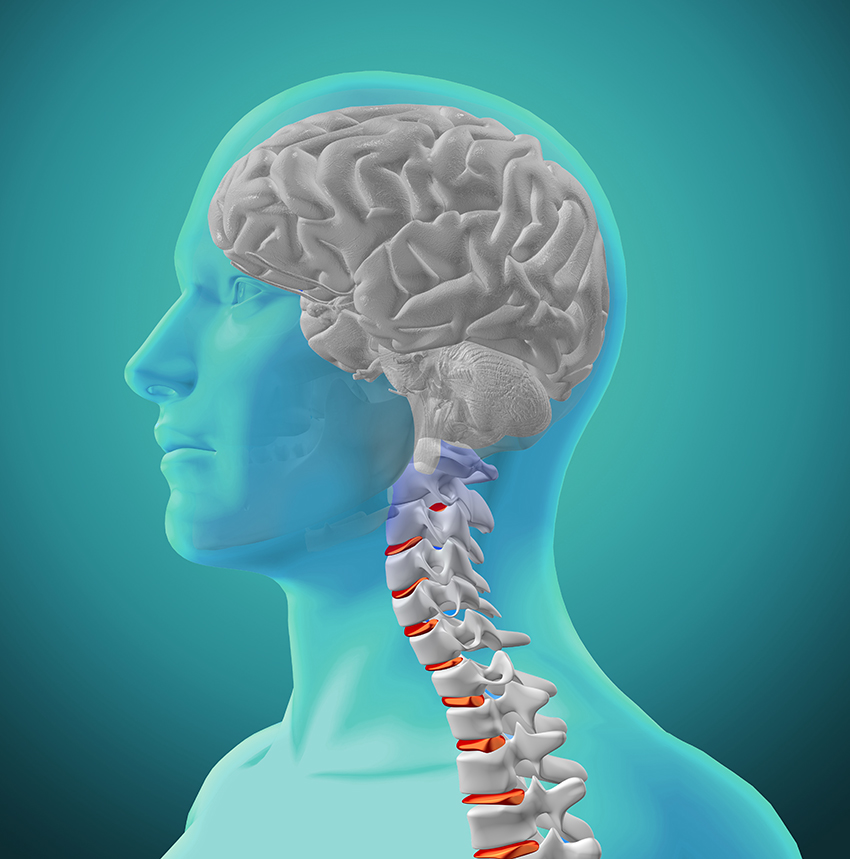
In the intricate symphony of human physiology, few relationships are as profound yet overlooked as the connection between spinal movement and brain function. While most people understand that the spine protects the spinal cord, fewer realize that the spine’s ability to move freely is actually essential for optimal brain health and nervous system function.
This revolutionary understanding gained scientific credibility through the groundbreaking work of Nobel Prize winner Roger Sperry, whose research fundamentally changed how we view the relationship between movement and brain function. Sperry’s investigations revealed that movement, particularly spinal movement, doesn’t just happen because the brain commands it—movement actually stimulates and nourishes the brain itself.
The Brain’s Hidden Hunger for Movement
Sperry’s research demonstrated that the spine is far more than a passive structural support system. He discovered that proper spinal movement is critical to brain health, establishing that “better than 90% of the stimulation and nutrition to the brain is generated by the movement of the spine.” This finding was revolutionary because it suggested that a sedentary spine could literally starve the brain of essential stimulation.
The mechanism behind this phenomenon lies in the complex network of mechanoreceptors—specialized sensory neurons embedded throughout the spinal joints, muscles, and ligaments. These microscopic sensors act like biological motion detectors, constantly monitoring spinal position and movement. When the spine moves through its natural ranges of motion, these receptors fire rapidly, sending streams of sensory information up the spinal cord to the brain.
This constant flow of movement-generated signals serves multiple crucial functions. First, it provides the brain with essential proprioceptive information—the awareness of body position and movement in space. Without this input, the brain loses its spatial reference system, leading to poor coordination, balance problems, and increased risk of injury.
The Neurological Cascade of Spinal Motion
When spinal joints move freely through their full range of motion, they create what neuroscientists call “facilitated segments”—areas of heightened nerve activity that enhance overall nervous system function. This increased neural activity doesn’t just affect local spinal nerves; it creates a cascade effect that influences brain regions responsible for everything from cognitive function to emotional regulation.
Research has shown that restricted spinal movement leads to decreased mechanoreceptor firing, which in turn reduces the sensory input reaching the brain. This sensory deprivation can result in what researchers term “cortical map distortion”—changes in how the brain represents and controls different body parts. Over time, these changes can manifest as decreased coordination, altered pain perception, and even cognitive dysfunction.
The cerebellum, often called the brain’s “movement center,” is particularly dependent on spinal motion input. This region, which coordinates movement and maintains balance, requires constant feedback from spinal mechanoreceptors to function optimally. When spinal mobility is compromised, cerebellar function suffers, leading to the characteristic unsteadiness and movement difficulties seen in people with chronic spinal restrictions.
Modern Life’s Impact on Spinal Motion
In our increasingly sedentary society, the implications of Sperry’s findings are particularly relevant. Hours spent hunched over computers, looking down at phones, and sitting in cars create patterns of spinal restriction that would have been foreign to our ancestors. These modern postures not only limit spinal range of motion but also create specific patterns of movement dysfunction that can persist even when we’re not in these positions.
The thoracic (mid-back region) part of the spine, in particular, suffers in our forward-head, rounded-shoulder culture. This region, which should demonstrate significant rotational (twisting), and lateral (sideways) bending mobility, often becomes rigid and hypomobile (decreased mobility). The resulting decrease in mechanoreceptor stimulation from this area can affect everything from breathing patterns to cognitive clarity.
Similarly, the cervical spine’s (or neck) natural lordotic, or C-shaped, curve and rotational capacity are often compromised by prolonged forward head postures. Given the high concentration of mechanoreceptors in the upper cervical region and their direct connections to brain stem centers controlling vital functions, restrictions in this area can have far-reaching neurological consequences.
Restoring the Brain-Spine Connection
Understanding the critical relationship between spinal motion and brain health opens new avenues for enhancing neurological function. Regular spinal adjustments by a chiropractor, together with specific exercises that promote full-range spinal movement becomes not just a matter of physical comfort but of neurological necessity.
Simple movements like spinal rotations, side bends, and extension exercises can help restore mechanoreceptor activity and re-establish proper brain-spine communication. More complex activities like yoga, tai chi, and dance provide multi-planar spinal movements that create rich sensory experiences for the nervous system.
The key insight from Sperry’s work is that the brain doesn’t just control movement—it depends on movement for its own optimal function. Every time we move our spine through its natural ranges of motion, we’re literally feeding our brain the sensory nutrition it needs to maintain its complex neural networks.
As we continue to understand the profound connections between spinal mobility and neurological health, it becomes clear that maintaining spinal range of motion isn’t just about preventing back pain—it’s about preserving and enhancing the very foundation of nervous system function. In a world that increasingly restricts our natural movement patterns, consciously cultivating spinal mobility becomes an act of neurological self-care, honouring the ancient relationship between a moving spine and a thriving brain.