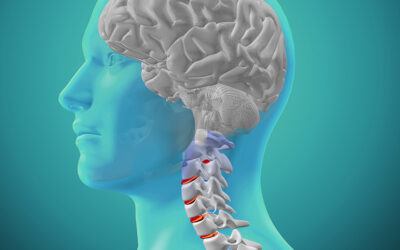
Ever had one of those days where you just can’t think straight? Where focusing feels like trying to catch fog with your bare hands? Before you blame it on a lack of sleep or too much stress, you might want to check something else: your posture.
That’s right—the way you’re holding your head right now could be messing with your brain function. Let me explain.
The Weight of the World (On Your Neck)
Look around next time you’re in public. What do you see? People hunched over phones, necks craned forward, shoulders rounded. We call this “forward head posture,” and it’s become an epidemic in our digital age.
Here’s what’s happening: Your head weighs about 4.5 – 5.5 kg (10-12 pounds) when it’s balanced properly atop your spine. But for every 2.5 cm (1 inch) your head moves forward, the effective weight on your spine increases by about 4.5 kg (or 10 pounds)! That means if your head is just 7.5cm (or 3 inches) forward (which is common), your neck muscles are dealing with the equivalent of an 18 kg (or 40-pound) head.
Your Neck: The Highway to Your Brain
“But what does this have to do with my brain?” I hear you asking.
Everything, actually. Your spinal cord is like the main highway connecting your brain to the rest of your body. All those important neural signals travel up and down this pathway. When your head juts forward, it creates tension and compression in your upper cervical spine, right where it connects to your brain stem.
This compression can:
- Restrict blood flow to your brain (and your brain is kind of a blood hog, using about 20% of your body’s oxygen supply)
- Put pressure on nerves that affect cognitive function
- Trigger inflammation that impacts how clearly you can think
- Disrupt cerebrospinal fluid flow that bathes and nourishes your brain
Brain Fog Is Real
That mental cloudiness you feel after hours at your desk? It’s not all in your head—well, actually, it is, but it’s likely connected to your posture! When your posture is compromised, your brain has to work harder to process information while receiving less of the resources it needs.
Many of my patients describe it as feeling like they’re “thinking through molasses.” They struggle to find words, lose their train of thought, or find it hard to concentrate. And often, they never connect these symptoms to their forward-leaning posture.
Your Brain on Good Posture
The good news? This is reversible. When you restore proper head alignment, magical things can happen:
- Blood flow to your brain improves
- Nerve pressure is reduced
- Inflammation decreases
- Brain-body communication clears up
One patient described the sensation after her first adjustment as “like someone turned up the brightness on my brain.” Another said it felt like “finally tuning in a radio station that had been static for years.”
The Two-Minute Posture Check
Want to give your brain a quick boost? Try this:
- Sit or stand tall, imagining a string pulling you up from the crown of your head
- Gently draw your chin back (not down), creating what some call a “double chin” (don’t worry, no one’s looking!)
- Feel the back of your neck lengthen
- Keep your eyes level with the horizon
- Take three deep breaths
Even this simple reset can improve blood flow to your brain and reduce nerve compression. Do it several times a day, especially when you’ve been looking down at screens.
Remember, your brain doesn’t exist in isolation from the rest of your body. The way you physically hold yourself affects how you mentally perform. In fact, I’d argue that one of the fastest ways to change how your brain works is to change how you hold your head.
So next time you’re feeling foggy or unfocused, check in with your posture before reaching for that extra cup of coffee. Your brain will thank you for it.
I specialise in gentle, corrective care for posture-related issues and their effects on neurological function. For more information on improving your posture and brain health, book a consultation.